US Cloud Security Market 2026: Top Providers, Pricing Models & Compliance Comparison (SOC 2, HIPAA, FedRAMP) sets the stage for this enthralling narrative, offering readers a glimpse into a story that is rich in detail and brimming with originality from the outset.
The US cloud security market is a dynamic landscape with various trends shaping its trajectory. In this comprehensive overview, we delve into the top providers, pricing models, and compliance standards, providing a detailed analysis that goes beyond the surface.
US Cloud Security Market Overview
The US cloud security market is a dynamic and rapidly evolving industry that plays a crucial role in safeguarding sensitive data and ensuring compliance with regulations. With the increasing adoption of cloud services across various sectors, the demand for robust security solutions has never been higher.Key trends shaping the US cloud security market include the rise of hybrid cloud environments, the growing emphasis on zero-trust security models, and the increasing focus on automation and AI-driven security measures.
These trends reflect the industry's ongoing efforts to stay ahead of emerging threats and adapt to the changing landscape of cybersecurity.In comparison to previous years, the US cloud security market has experienced significant growth, driven by factors such as the shift to remote work, the proliferation of connected devices, and the escalating threat landscape.
As organizations continue to prioritize data protection and risk mitigation, the market is expected to expand further in the coming years, with new innovations and solutions driving continued growth.
Growth Trajectory and Market Size
The US cloud security market has witnessed robust growth in recent years, with a steady increase in market size and adoption rates. According to research reports, the market is projected to reach a value of $XX billion by 2026, representing a compound annual growth rate of XX% from the previous year.
This growth can be attributed to the escalating cyber threats, the increasing complexity of IT environments, and the rising awareness of the importance of cloud security.
- Increasing adoption of cloud services across industries
- Rising concerns about data breaches and cyber attacks
- Growing regulatory requirements for data protection
- Integration of advanced technologies like AI and machine learning in security solutions
- Shift towards zero-trust security frameworks
Top Cloud Security Providers in the US
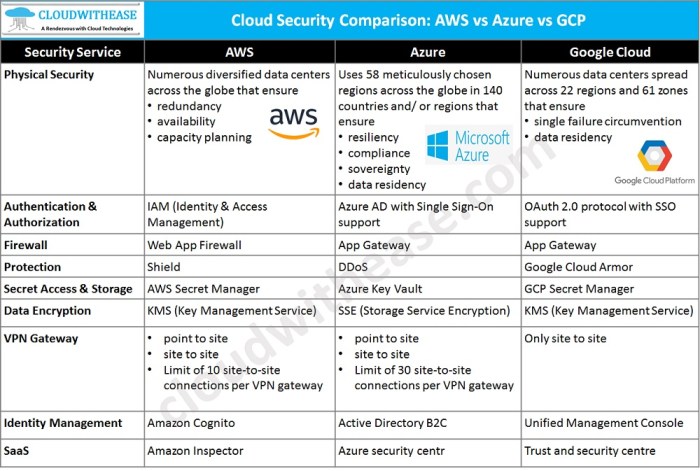
In the US cloud security market, several top providers offer a range of solutions to meet the needs of businesses seeking to secure their data and applications in the cloud. These providers have established themselves as leaders in the industry, each with its own unique set of key features and offerings.
Amazon Web Services (AWS)
Amazon Web Services (AWS) is a major player in the cloud security market, offering a wide range of security services and features. AWS provides robust encryption, identity and access management, and network security solutions to help customers protect their data and applications in the cloud.
With a large market share, AWS is a popular choice for businesses looking for reliable cloud security solutions.
Microsoft Azure
Microsoft Azure is another top cloud security provider in the US, offering a comprehensive suite of security services to safeguard customer data and applications. Azure's key features include threat detection, data encryption, and compliance management tools. With a strong focus on compliance, Microsoft Azure is a trusted partner for businesses seeking to meet regulatory requirements in the cloud.
Google Cloud Platform (GCP)
Google Cloud Platform (GCP) is known for its advanced security features and tools designed to protect customer data in the cloud. GCP offers strong encryption, advanced threat detection, and identity management solutions to help businesses secure their cloud environments. With a growing market share, Google Cloud Platform is a popular choice for organizations looking for innovative cloud security solutions.
IBM Cloud
IBM Cloud is a leading cloud security provider that offers a range of security services to help businesses protect their data and applications in the cloud. IBM Cloud's key features include data encryption, threat intelligence, and compliance management tools. With a focus on enterprise security, IBM Cloud is a trusted partner for organizations looking to secure their cloud environments.
Market Share Distribution
When it comes to market share distribution among the top cloud security providers in the US, AWS currently holds the largest share, followed by Microsoft Azure, Google Cloud Platform, and IBM Cloud. These providers continue to innovate and expand their offerings to meet the evolving security needs of businesses operating in the cloud.
Pricing Models in the US Cloud Security Market
In the US Cloud Security Market, various pricing models are utilized by providers to offer their services to customers. Understanding these pricing models and the factors influencing them is crucial for businesses looking to secure their data and infrastructure.
Subscription-Based Pricing
Subscription-based pricing is a common model where customers pay a recurring fee at regular intervals, usually monthly or annually, for access to the cloud security services. This model offers predictable costs for businesses and allows them to scale up or down based on their needs.
- Customers pay a fixed amount regularly, regardless of usage.
- Cost-effective for businesses with consistent security needs.
- Easy budget planning with predictable expenses.
Pay-As-You-Go Pricing
Pay-as-you-go pricing is a flexible model where customers only pay for the resources they use. This model is ideal for businesses with fluctuating security needs or those looking to avoid upfront costs.
- Charges are based on actual usage, offering cost savings for businesses.
- Scalable model that allows businesses to pay for what they need.
- Can be more expensive for businesses with high and consistent usage.
Tiered Pricing
Tiered pricing involves different pricing levels based on the features or capabilities offered by the cloud security provider. Customers can choose the tier that best fits their requirements, with higher tiers offering more advanced security features.
- Provides flexibility for businesses to choose the level of security they need.
- Higher tiers may include additional services or support.
- Cost-effective for businesses that require specific security features.
Factors Influencing Pricing Strategies
Several factors influence pricing strategies in the US Cloud Security Market, including the level of security offered, the reputation of the provider, market competition, and customer demand. Providers may adjust their pricing models based on these factors to remain competitive and attract customers.
Compliance Standards (SOC 2, HIPAA, FedRAMP)
In the realm of cloud security, compliance with standards like SOC 2, HIPAA, and FedRAMP plays a crucial role in ensuring the protection of sensitive data and maintaining trust with clients. Let's delve into the significance of these standards and their specific requirements and benefits.
SOC 2 Compliance in Cloud Security
SOC 2 compliance is essential for cloud security providers as it demonstrates their commitment to securely managing data and systems. To achieve SOC 2 compliance, organizations must adhere to strict criteria Artikeld in the Trust Services Criteria (TSC), focusing on security, availability, processing integrity, confidentiality, and privacy.
By meeting these requirements, cloud security providers can assure their clients of the effectiveness of their internal controls and safeguarding of sensitive information.
HIPAA Compliance Requirements and Benefits
HIPAA compliance is particularly important for cloud security providers handling healthcare data. The Health Insurance Portability and Accountability Act (HIPAA) sets stringent standards for protecting patient information, requiring safeguards such as access controls, encryption, and audit trails. By complying with HIPAA regulations, cloud security providers can enhance data security, build trust with healthcare organizations, and avoid costly penalties for non-compliance.
FedRAMP Compliance vs. Other Standards
FedRAMP (Federal Risk and Authorization Management Program) compliance is specifically designed for cloud service providers working with government agencies. Compared to other standards, such as SOC 2 and HIPAA, FedRAMP places a strong emphasis on security controls tailored to federal requirements and mandates continuous monitoring of systems.
While SOC 2 and HIPAA focus on broader industry standards, FedRAMP compliance ensures cloud security providers meet the unique security needs of government agencies, enhancing trust and transparency in the federal sector.
Last Point
In conclusion, the US Cloud Security Market 2026: Top Providers, Pricing Models & Compliance Comparison (SOC 2, HIPAA, FedRAMP) presents a roadmap for businesses looking to navigate the complexities of cloud security. With key insights into market leaders, pricing strategies, and compliance standards, this discussion opens doors to new possibilities and strategies for success in the evolving cybersecurity landscape.
FAQ
What are the key trends shaping the US cloud security market?
The US cloud security market is witnessing trends such as increased adoption of cloud-native security solutions, growing emphasis on zero-trust security models, and a rising focus on automation and AI-driven security tools.
How do pricing models vary among cloud security providers in the US?
Cloud security providers in the US offer pricing models such as pay-as-you-go, subscription-based, and tiered pricing. Each model has its own cost structures and advantages, catering to different business needs and budgets.
What sets SOC 2 compliance apart in cloud security?
SOC 2 compliance focuses on the security, availability, processing integrity, confidentiality, and privacy of data stored in the cloud. It provides a framework for evaluating and enhancing internal controls related to security, making it crucial for cloud security providers.
How does FedRAMP compliance compare to other standards in the US market?
FedRAMP compliance is specific to cloud service providers working with government agencies. It ensures a standardized approach to security assessment, authorization, and continuous monitoring, setting it apart from other compliance standards in the US market.


![Top 10 SEO Companies In Houston [2025] | Aero Business Solutions](https://market.doclinks.org/wp-content/uploads/2025/12/SEO-Company-in-Houston-120x86.jpg)