Delving into T-Bone Truck Accident Lawyer: Proving Right-of-Way Violations in Heavy Hauling, this introduction immerses readers in a unique and compelling narrative, with casual formal language style that is both engaging and thought-provoking from the very first sentence.
In the following paragraphs, we will explore the intricacies of right-of-way violations in truck accidents, the importance of evidence collection, the role of expert witnesses, and the legal considerations and challenges involved in such cases.
Understanding Right-of-Way Violations in Truck Accidents
When it comes to heavy hauling accidents, understanding right-of-way violations is crucial in determining liability and seeking compensation for damages. Right-of-way violations occur when a driver fails to yield to another vehicle that has the legal right to proceed. This is a common issue in T-bone truck accidents, where the side of one vehicle is impacted by the front of another, often due to a failure to yield.
Examples of Common Scenarios
- Scenario 1: A truck driver runs a red light and collides with a vehicle that had the right of way, causing a T-bone accident.
- Scenario 2: A truck driver makes a left turn without yielding to oncoming traffic, resulting in a collision with another vehicle.
- Scenario 3: A truck driver changes lanes without checking blind spots, forcing another vehicle off the road and causing an accident.
Legal Implications
Proving right-of-way violations in heavy hauling cases is essential for establishing negligence on the part of the truck driver. This can help in holding the responsible party accountable for the damages and injuries caused in the accident. Evidence such as witness statements, traffic camera footage, and accident reconstruction reports can be crucial in demonstrating the violation of right-of-way laws.
Importance of Evidence Collection
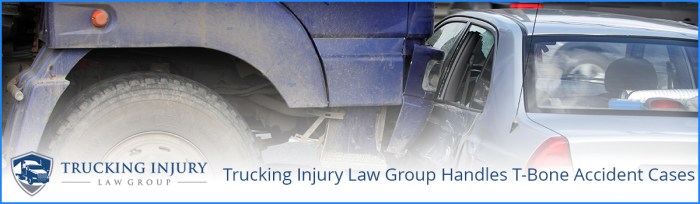
In a T-bone truck accident case, collecting evidence is crucial to proving right-of-way violations and determining liability. The right pieces of evidence can make a significant difference in the outcome of the case.
Role of Eyewitness Testimonies
Eyewitness testimonies play a vital role in establishing right-of-way violations in T-bone truck accidents. Eyewitnesses who saw the accident unfold can provide valuable insights into who had the right of way and whether the truck driver violated traffic laws. Their testimonies can help corroborate other evidence and strengthen the case.
Physical Evidence Support
Physical evidence such as skid marks, damage patterns on vehicles, and road conditions can also support the claim of a right-of-way violation. Skid marks can indicate sudden braking or swerving, which may suggest that the truck driver failed to yield the right of way.
Damage patterns on the vehicles can provide clues about the point of impact and the direction of travel, helping to reconstruct the accident scene. By analyzing these physical pieces of evidence, experts can piece together what happened and who was at fault in the T-bone collision.
Expert Witnesses in T-Bone Truck Accident Cases
Expert witnesses play a crucial role in proving right-of-way violations in heavy hauling accidents. Their specialized knowledge and experience can provide valuable insights and analysis that can strengthen the case for the victim.
Significance of Expert Witnesses
Expert witnesses in truck accident cases are typically individuals with a background in trucking regulations, accident reconstruction, or engineering. Their qualifications and expertise are essential in establishing the facts surrounding a T-bone truck accident and determining whether a right-of-way violation occurred.
- Expert witnesses can provide detailed analysis of the accident scene, vehicle damage, and other relevant factors to determine the sequence of events leading to the collision.
- They can testify on behalf of the victim to explain complex technical details to the court and help the jury understand the nuances of the case.
- Their testimony can be instrumental in proving negligence or misconduct on the part of the truck driver or the trucking company, especially in cases where right-of-way violations are disputed.
Qualifications and Expertise of Expert Witnesses
Expert witnesses in truck accident cases should possess the following qualifications and expertise:
- A background in accident reconstruction, engineering, or trucking regulations.
- Experience in analyzing truck accidents and identifying potential violations of right-of-way laws.
- Certifications or credentials that demonstrate their expertise in the field of truck accident investigation.
Expert witnesses should have a strong track record of providing expert testimony in court and be able to effectively communicate their findings to a jury.
Strength of Expert Testimony
Expert testimony can significantly strengthen the case for right-of-way violations in T-bone truck accidents by:
- Providing objective analysis and interpretation of the evidence to support the victim's claim.
- Offering expert opinions that can refute any opposing arguments or theories presented by the defense.
- Enhancing the credibility of the victim's case by providing expert insights into the technical aspects of the accident.
Legal Considerations and Challenges
When it comes to proving right-of-way violations in heavy hauling accidents, there are several legal challenges that can arise. These challenges can make it difficult to establish liability and hold the responsible parties accountable for their actions. Trucking companies often have powerful legal teams that will try to counter claims of right-of-way violations using various defenses.
It is crucial for T-Bone truck accident lawyers to be prepared to overcome these legal hurdles and effectively prove right-of-way violations in court.
Legal Challenges Associated with Proving Right-of-Way Violations
- Complexity of traffic laws and regulations: Heavy hauling accidents involve intricate traffic laws and regulations that can be challenging to interpret and apply in court.
- Lack of clear evidence: Proving right-of-way violations may require substantial evidence, which can be difficult to collect and present in court.
- Conflicting testimonies: Witness testimonies in T-Bone truck accident cases may vary, leading to challenges in establishing a clear sequence of events.
Potential Defenses by Trucking Companies
- Driver error: Trucking companies may argue that the right-of-way violation was due to the actions of the other driver, deflecting blame away from their own driver.
- Mechanical failure: Companies might claim that a mechanical failure or equipment malfunction caused the accident, shifting liability away from the driver.
- Contributory negligence: Trucking companies could argue that the other driver contributed to the accident in some way, reducing their own liability.
Strategies for Overcoming Legal Hurdles
- Thorough investigation: Conduct a comprehensive investigation to gather as much evidence as possible to support your claim of right-of-way violation.
- Expert witnesses: Utilize expert witnesses, such as accident reconstruction specialists, to provide professional opinions and testimony in court.
- Legal expertise: Work with experienced T-Bone truck accident lawyers who understand the complexities of these cases and can navigate the legal challenges effectively.
Final Review
In conclusion, the discussion on proving right-of-way violations in heavy hauling accidents sheds light on the complexities of these cases and the crucial elements required to build a strong legal argument. It is imperative for individuals involved in such accidents to seek the expertise of a qualified T-Bone Truck Accident Lawyer to navigate through the legal intricacies effectively.
Expert Answers
What constitutes a right-of-way violation in heavy hauling accidents?
A right-of-way violation in heavy hauling accidents occurs when one vehicle fails to yield to another vehicle that has the legal right to proceed.
What role do eyewitness testimonies play in establishing right-of-way violations?
Eyewitness testimonies can serve as crucial evidence in proving right-of-way violations by providing firsthand accounts of the accident from individuals who witnessed the sequence of events.
How can expert witnesses strengthen a case for right-of-way violations?
Expert witnesses bring specialized knowledge and expertise to the table, helping to interpret complex technical aspects of the accident and provide professional opinions that can bolster the case for right-of-way violations.
What legal challenges are associated with proving right-of-way violations in heavy hauling accidents?
Legal challenges may include complexities in determining fault, facing counterclaims from trucking companies, and navigating through intricate legal procedures to establish right-of-way violations.